
If you’ve built in WordPress, you’ve dealt with scheduled tasks. Code that needs to run on a regular basis but doesn’t need anyone “online” to trigger it. That sounds like a simple cron job.
Except WP-Cron isn’t one. It only fires when someone visits the site. That email report you needed sent last night? No one viewed the site until morning, so it didn’t go out until then.
You can work around this by disabling WP-Cron and setting up a real server cron to hit wp-cron.php every minute, but most people don’t know that’s necessary.
Laravel’s scheduler fixes this completely. You add one cron entry to your server (* * * * * php artisan schedule:run) and Laravel takes over from there. Every minute, it checks what’s due and runs it.
The difference is where you define your schedule. In WordPress, you register hooks with wp_schedule_event() and hope the timing lines up with traffic.
In Laravel, it’s expressive and centralized:
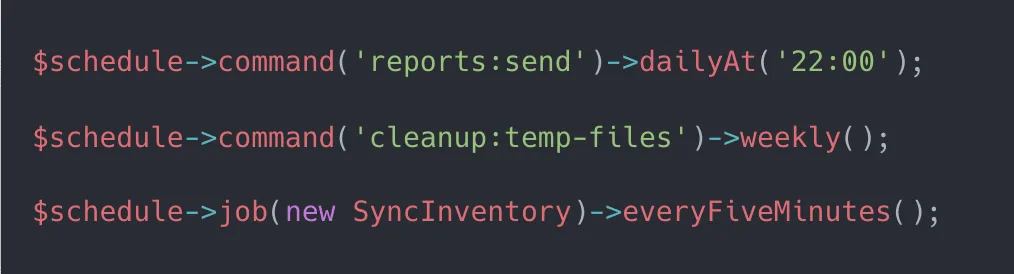
Everything lives in one place, reads like plain English, and runs exactly when you say it should.
Laravel also gives you guards WordPress doesn’t have:
->withoutOverlapping() prevents a long-running task from stacking on itself
->onOneServer() ensures only one instance runs if you’re load-balanced across multiple servers
->evenInMaintenanceMode() keeps critical tasks running during deploys
Try solving any of those cleanly in WordPress.
If you’re coming from WordPress and you’ve been trusting WP-Cron to handle anything time-sensitive, Laravel’s scheduler is a huge upgrade.